The Real Cost of a Truck Breakdown Is Everything Around the Repair
Small and midsize carriers often have enough trucks to suffer costly breakdowns, but not enough maintenance staff to manage them around the clock. Stefan Stojancic thinks the answer is to treat maintenance as an operating system, not a string of emergencies.
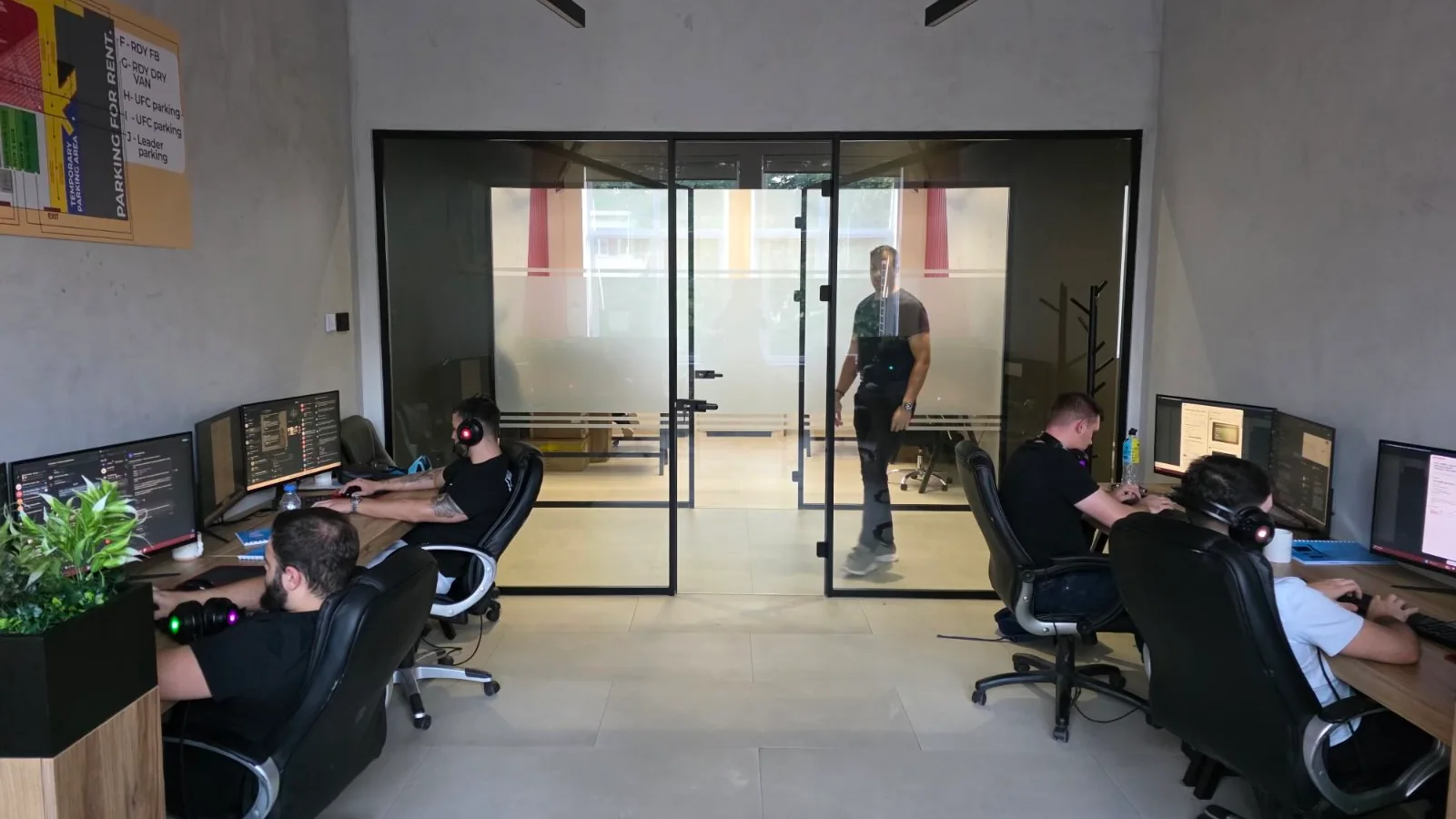
Photo credit
Photo supplied by Millennials Maintenance.The call usually begins with a mechanical problem: a warning light, a tire, a truck that will not move.
The management problem begins seconds later.
Is the truck safe where it sits? Can a mobile technician handle it, or does it need a tow? Which shop can work on that equipment? Does the estimate make sense? Is the part under warranty? Who has authority to approve the repair at 2 a.m.? And who will keep calling until the truck is moving again?
The repair bill arrives later. The confusion starts immediately.
This is the part of fleet maintenance that the industry still tends to underestimate. A broken component is a mechanical event. A breakdown is an operational event, and operational events spread. They consume a driver’s time, a dispatcher’s attention, a customer’s patience and, eventually, the carrier’s margin.
That distinction matters now. The American Transportation Research Institute reported that the average cost of operating a truck reached $2.336 per mile in 2025. Repair and maintenance costs increased 8.6% from the previous year, one of the largest increases among the cost categories ATRI tracks.
Fleets cannot solve that pressure by postponing necessary work. Federal rules require carriers to systematically inspect, repair and maintain vehicles under their control. The more useful target is the waste surrounding the work: slow decisions, inconsistent approvals, one-time vendor relationships, repeat repairs and records that never become intelligence.
That is the problem Millennials Maintenance was built to attack.
The gap between five trucks and a full maintenance department
There is an awkward stage in the life of a trucking company. The fleet is large enough that breakdowns are frequent and expensive, but too small to justify its own 24-hour maintenance department, purchasing team, warranty specialist and nationwide vendor network.
The dispatcher becomes the maintenance coordinator by default. That may work at noon near the home terminal. It is a much weaker system at midnight, two states away, with a loaded trailer and a driver asking what to do.
Small fleets often buy maintenance one emergency at a time. Every failure starts a new search for a shop, a new pricing conversation and a new judgment call made under pressure. The fleet has little leverage because it needs an answer now.
This is not evidence that shops are inherently dishonest or that dispatchers are careless. It is what happens when urgency is allowed to design the purchasing process.
Stefan Stojancic, general manager of Millennials Maintenance, recognized that problem after living on nearly every side of it.
He said he spent eight years driving, then operated a 15-truck company where he handled dispatch, recruiting and daily operations. Later, he worked inside a carrier with more than 300 trucks. The progression matters. He saw breakdowns first from the driver’s seat, then from the owner’s balance sheet and finally at the scale of a large operation.
“Many believe the repair invoice is the biggest expense,” Stojancic said. “In reality, downtime often costs far more than the repair itself.”
In 2022, he helped start Millennials Maintenance around a simple idea: smaller fleets could borrow the coordination structure of a much larger carrier without building the entire department themselves.
A coordinator is not a mechanic. That is the point

Stefan Stojancic, general manager of Millennials Maintenance. Photo supplied by Millennials Maintenance.
Millennials Maintenance does not employ the mechanic turning the wrench. Stojancic said the company employs nearly 40 people, including roughly 25 maintenance coordinators and operators, while repairs are performed by independent shops, dealerships, mobile providers and other vendors.
That separation is the heart of the model.
The shop diagnoses and repairs the truck. The coordinator represents the fleet’s process: finding options, reviewing the estimate, checking warranty eligibility, obtaining authorization, tracking the work and keeping the customer informed.
What the company is really selling is decision-making capacity at the moment when a fleet is least equipped to make a careful decision.
According to Stojancic, a typical event begins with the driver’s call. A coordinator collects the unit, location, symptoms and safety information; decides whether roadside repair, towing or routing to a shop is the best option; identifies a provider; reviews the estimate; obtains approval; and follows the job until the truck returns to service.
The mechanics of that workflow are not revolutionary. Its value comes from making the same steps happen every time, regardless of which dispatcher is working or where the truck stopped.
That consistency addresses five places where maintenance money commonly disappears.
First leak: preventive maintenance that keeps slipping
Skipping a PM can make this week’s cash position look better without creating an immediate bill. The cost appears later as a roadside failure, a tow or a more extensive repair.
The first number to examine is PM compliance by unit, not merely the fleetwide average. A respectable overall rate can hide the same trucks repeatedly missing service.
Compare overdue PMs with roadside calls, towing events and repeat failures. If the same units appear in every group, the pattern is probably not bad luck.
FMCSA does not prescribe one maintenance interval for every commercial vehicle. Carriers must build schedules suited to their equipment and operations. That freedom only works if the schedule has an owner, a planned location and an escalation rule before the due date passes.
“Reducing costs should never mean delaying repairs,” Stojancic said.
Second leak: estimates approved without review
A breakdown creates pressure to say yes quickly. Fleets often confuse speed with the absence of scrutiny.
Someone should still confirm that the diagnosis matches the symptoms, the proposed labor is reasonable, the parts meet the requested standard and the work is not covered by an OEM, supplier or prior-repair warranty. The reviewer should ask whether the shop is correcting the cause or only replacing the damaged component.
Written approval limits help. Routine work can move immediately, while larger or unusual repairs receive another set of eyes.
According to Stojancic, Millennials Maintenance reviews labor hours, parts prices, diagnosis and warranty eligibility before seeking the customer’s approval. Fleets do not need to outsource that checklist, but they do need someone to own it.
Third leak: downtime nobody measures
The cheapest repair quote can become the most expensive choice if the truck waits two additional days for a bay or a part.
Stojancic said fleets should consider lost revenue, driver pay, missed loads, dispatch disruption and customer impact. A better internal calculation avoids counting the same loss twice:
Downtime cost = lost contribution margin + unavoidable driver and recovery costs + towing, layover or service penalties + documented customer impact
Contribution margin is more useful than gross revenue when the truck avoids variable costs such as fuel while it is down.
The timestamps matter as much as the estimate. Record when the driver reported the failure, when a provider accepted the job, when diagnosis began, when approval arrived, when parts became available and when the unit returned to service.
That timeline tells a fleet whether its recurring delay is finding a shop, diagnosing the problem, authorizing work, sourcing parts or simply keeping everyone informed.
Fourth leak: buying every repair as a one-time emergency
A carrier calling the nearest shop for the first time during a breakdown has almost no bargaining power. It may pay walk-in prices while discovering whether the provider can even handle the equipment.
Stojancic describes the Millennials Maintenance network as more than 2,000 dealerships, independent shops, mobile providers, tire vendors, towing companies and parts suppliers. The mix is important. “2,000+” does not mean 2,000 identical repair shops with the same hours and capabilities.
The useful advantage is not the size of a directory. It is repeated purchasing and accumulated knowledge: who answers after hours, who works on a specific platform, who communicates clearly and who resolves a problem when the first repair fails.
Any company claiming national coverage should be tested in the fleet’s hardest lanes. Ask which provider could handle a specific unit at 2 a.m., how far away it is, whether the required part is likely to be available and what happens after a misdiagnosis.
Fifth leak: records that never become intelligence
An invoice archive proves that money was spent. It does not explain why.
Stojancic recommends tracking maintenance cost per mile, PM compliance, roadside breakdowns, downtime, repeat repairs, towing, cost by repair category and truck uptime every month.
Those measures should be segmented by unit age, model, location, shop and repair type. Otherwise, a few bad actors, whether trucks, components or vendors, disappear inside the fleetwide average.
The central mistake is treating maintenance data as paperwork produced after the repair. Used correctly, it should change the next PM schedule, approval, purchasing decision or replacement plan.
Why this approach can work
The model has three credible sources of leverage.
The first is attention. A dispatcher managing loads, drivers and customers cannot always spend an hour comparing labor, locating a part or pursuing a warranty. A coordinator can.
The second is repetition. A single 15-truck carrier may encounter a particular shop once. A coordinator working across many fleets can accumulate pricing history and a record of how providers perform.
The third is institutional memory. When repair information is standardized by unit and category, the fleet can see a pattern instead of a stack of unrelated invoices.
This does not make outsourced coordination automatically cheaper. It makes it a rational response to a real organizational gap. The service is most compelling when the fleet has outgrown improvised maintenance but has not built the full internal department required to replace it.
It is less compelling for a carrier that already has round-the-clock maintenance staff, established national purchasing terms, mature reporting and strong coverage along its lanes. Stojancic acknowledged as much, saying fleets with a fully staffed department and developed vendor network may need only limited support.
There are operational limits, too. Weather, location, equipment, parts availability and local capacity affect response times. Warranty work, fixed dealership pricing and specialized repairs may leave little room to negotiate. On those jobs, the value has to come from reduced confusion, better follow-through or time saved, not a cheaper part.
What to make of the company’s numbers
Millennials Maintenance publishes several performance claims. Stojancic said internal tracking supports a five-minute response figure and an approximately 30% reduction in downtime. He also said the reporting methodology is being refined and did not provide the period, customer count, truck count or number of service events behind those figures.
The company’s website advertises savings of 10–30% in one place and up to 25% in another. Stojancic did not offer an average or median across repairs. He said results vary by job, location, vendor and equipment, and that the usual baseline is the original estimate before negotiation or an alternative is sourced.
Those are company claims, and they should be read that way. The best test is not whether the headline percentage sounds plausible. It is whether the fleet can reproduce the calculation on its own invoices.
The least useful public number is “1,500,” which appears on the company’s website alongside references to drivers or fleets. Stojancic’s written response did not define whether it means active fleets, trucks, drivers, customers or service events. A number without a clearly defined unit is not a benchmark.
At the time this draft was prepared, the company listed After-Hours Support at $34.99 per truck per month, Standard at $44.99 and Full Maintenance at $69.99. Its website also listed invoice-based coordination fees from $19 to $1,099 when the company says it generates savings. Enterprise pricing was described as custom.
That gives a fleet enough information to ask the question that matters:
Net value = documented repair savings + validated downtime value + administrative time saved − every monthly and event-based fee
For direct savings, compare the same repair scope, parts quality and warranty. If the scope changed, separate that from the claimed price reduction. Measure the result over six or twelve months instead of annualizing the best repair of the year.
Why the reader should care
Maintenance is one of the few major fleet expenses where a substantial share of the cost is determined after something has already gone wrong.
That makes process unusually valuable. A carrier may not control when a turbo fails or a tire separates. It can control who receives the call, who reviews the estimate, how quickly an approval is made, whether warranty is checked and whether the event teaches the company anything.
This is why the Millennials Maintenance approach is worth examining even for a fleet that never hires the company. It reframes maintenance from “find somebody to fix the truck” to “build a repeatable system for making expensive decisions under pressure.”
The best version of a coordination service should be almost invisible. The driver makes one call. The fleet receives a clear option and a price. The repair moves. The records return to the customer. The next decision is better because the last one was documented.
There is nothing glamorous about that. It is procurement, operations and persistence applied to a part of trucking that is still too often managed through hurried calls and scattered invoices.
But that is also why it can matter.
The product is not the repair. It is less chaos around the repair. For a fleet operating on thin margins, less chaos has measurable value.
Company contact
Stefan Stojancic is general manager of Millennials Maintenance.
Email StefanStef@millennialstrucking.comCopy + open Call Stefan
What it means
Drivers
A coordinated process can replace multiple breakdown calls with one point of contact and clearer repair updates.
Fleets
Compare documented repair savings, downtime avoided and administrative time saved against every monthly and event-based fee.
Safety pros
Consistent PM schedules, approval rules and repair records can make maintenance follow-through easier to audit and improve.
BRFree weekly briefing
Keep the whole compliance week in view.
The HwyPulse Briefing links every primary source and puts deadlines in one five-minute read.
Get the briefing →Primary sources
- 2026 Analysis of the Operational Costs of Trucking
American Transportation Research InstituteOpen source ↗ - What is meant by systematic inspection, repair and maintenance?
Federal Motor Carrier Safety AdministrationOpen source ↗ - Fleet Maintenance Plans
Millennials MaintenanceOpen source ↗ - Millennials Maintenance
Millennials MaintenanceOpen source ↗
NXKeep reading
Related coverage
Who Takes the 2 A.M. Breakdown Call? A Chicago Company Built an Answer
Millennials Maintenance says its round-the-clock coordinators and nationwide repair network can give small carriers the maintenance desk they cannot afford to build themselves.
A Contractor Won't Return Your Truck. Here's What You Can Actually Do.
The truck is still moving after the contractor was fired. Here are the real recovery options, from a demand letter to physical control of the asset.
Which Inspection Violations Don’t Affect Your CSA Score—and Should Your Fleet Still Fight the Ticket?
Search an exact inspection violation code against FMCSA Appendix A v3.21, calculate its base time-weighted points, and understand what a not-listed result does—and does not—mean.